Þorvarður Árnason
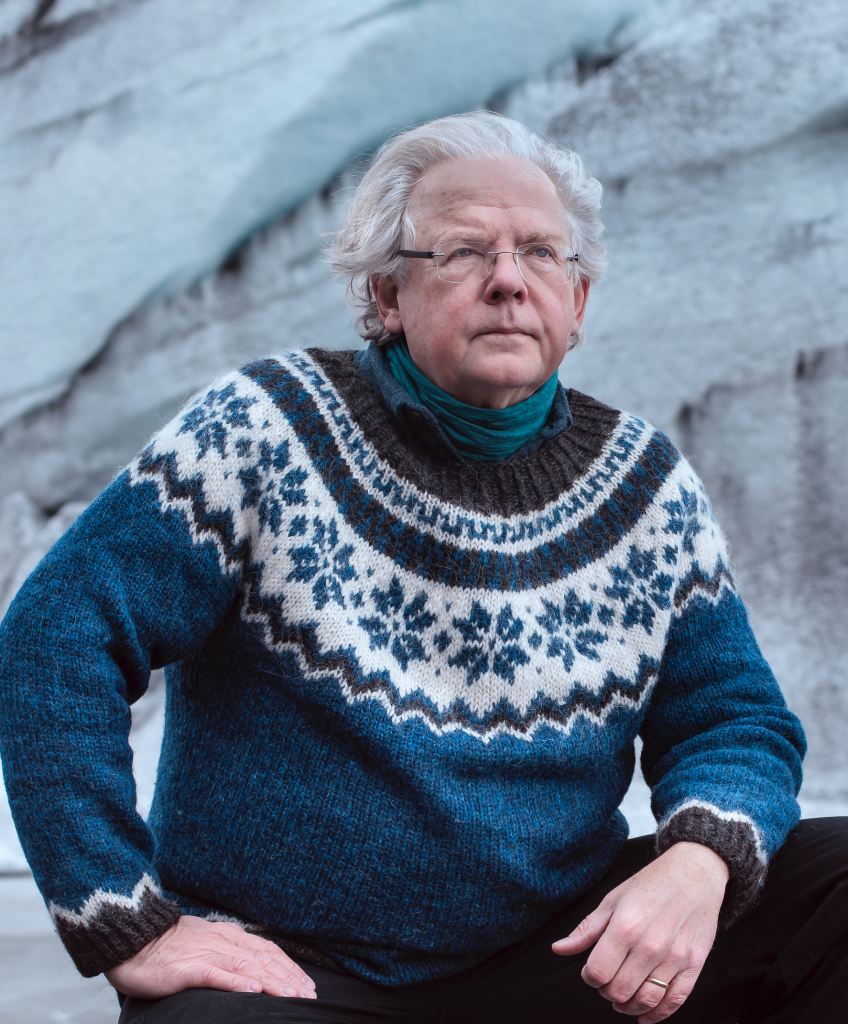
The summer of 2006 marked a major turning point in my life when my family moved to Höfn in Hornafjörður, where I have lived ever since. In hindsight, three things happened more or less simultaneously: First, I had just begun my first large-scale, systematic research on the wild, natural landscapes of Iceland, which led to considerable shifts in the focus of my scholarly work; secondly, I acquired my first proper digital camera, along with a decent collection of lenses; and thirdly, I now had very easy access to extremely beautiful and diverse nature, practically in my own backyard. Over the next few months, one could say that I was “reborn” as a visual/filmic artist, and at the same time a certain long-term chain reaction or process was set in motion, gradually transforming my research, photography/film work, and, indeed, my entire life.
Above all, what tied these things all together were the glaciers – I knew very little about them before I settled in Höfn, and they completely captivated me, almost from day one. I had previously become enchanted with wild nature – especially by Dettifoss and the entire series of waterfalls in Jökulsárgljúfur, as well as by the striking landscapes of the Central Highland (in Þjórsárver, Landmannalaugar, Askja, and elsewhere) – but now I was no longer a temporary visitor transplanted into a strange nature, but rather much more like someone in their home environment. The glaciers presented themselves to me daily from my domicile in Höfn, and it wasn’t long before I began exploring individual glacier tongues – of which there are around 20 in Southeast Iceland – in much greater proximity.
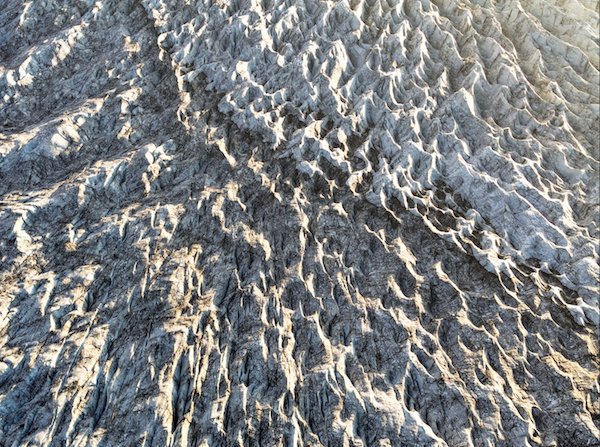
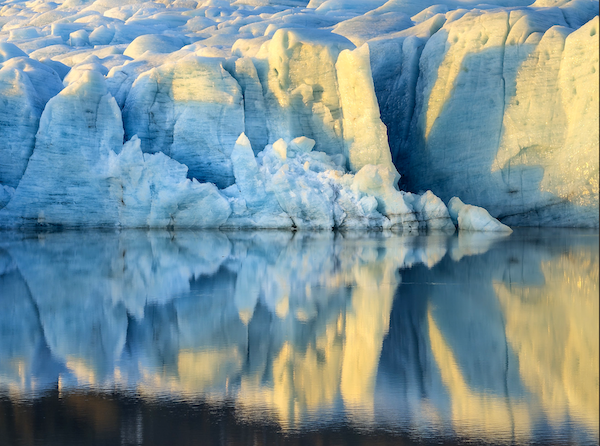
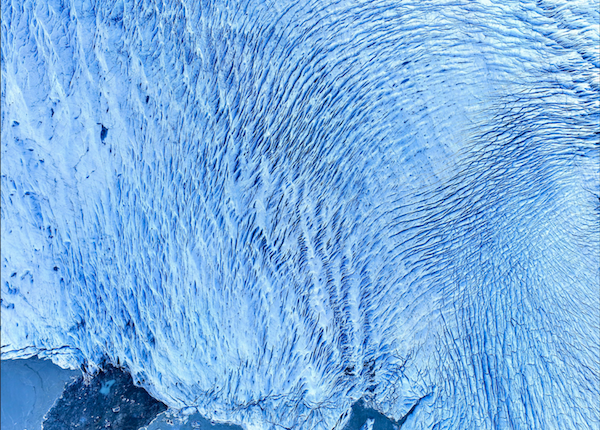
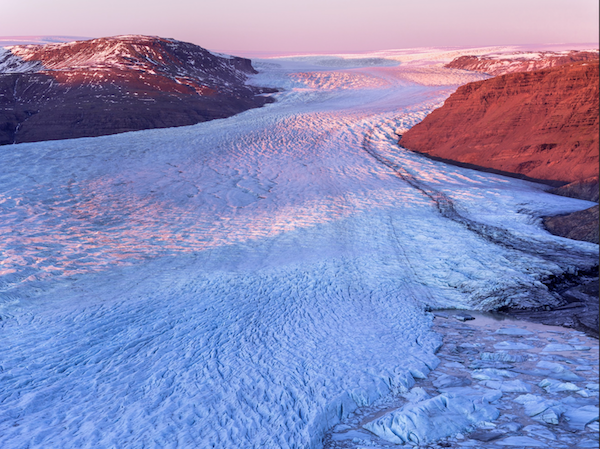 Glaciers are in various ways “on the borderline” – they are both individual natural phenomena, each with its own character, and landscape totalities. They also exhibit various characteristics that one generally associates more with living beings than with inanimate nature. Glacier tongues shift their appearance with the seasons, becoming clear and blue in colour during the winter months.
They also move of their own accord, advancing due to their own weight, influenced by Earth’s gravity. And they are made of a certain wonder material – glacial ice – which, unlike ordinary ice, is created from snowflakes – water in crystalline form – that fall from the sky and then on top of one another, building up, layer by layer, the tremendous pressure required to complete the transmutation.
Although glaciers may seem still and unchanging from a distance, their immense dynamism and vitality become apparent after close, repeated encounters – one never approaches the same glacier twice.
Glaciers are in various ways “on the borderline” – they are both individual natural phenomena, each with its own character, and landscape totalities. They also exhibit various characteristics that one generally associates more with living beings than with inanimate nature. Glacier tongues shift their appearance with the seasons, becoming clear and blue in colour during the winter months.
They also move of their own accord, advancing due to their own weight, influenced by Earth’s gravity. And they are made of a certain wonder material – glacial ice – which, unlike ordinary ice, is created from snowflakes – water in crystalline form – that fall from the sky and then on top of one another, building up, layer by layer, the tremendous pressure required to complete the transmutation.
Although glaciers may seem still and unchanging from a distance, their immense dynamism and vitality become apparent after close, repeated encounters – one never approaches the same glacier twice.
Two extensive photographic projects that I undertook in those early years paved the way for a new way of thinking about the conditions for forming a connection between humans and wild nature, in particular through filmic arts. One of these involved photographic documentation and monitoring of the region’s most famous landmark, Jökulsárlón, and its immediate surroundings over the course of an entire year. The outcome showed me in black and white just how diverse the glacial landscape was, both from different viewpoints within the same area and, no less, due to seasonal variations. The other project concerned long-term monitoring of the recession of Hoffellsjökull, which involved monthly repeat photography from the same spot in front of the glacier´s edge. This project lasted for eight years, but in the end, I saw no point in continuing this work as the glacier edge had receded too far from the photo site for any significant differences to be seen in the images from month to month.
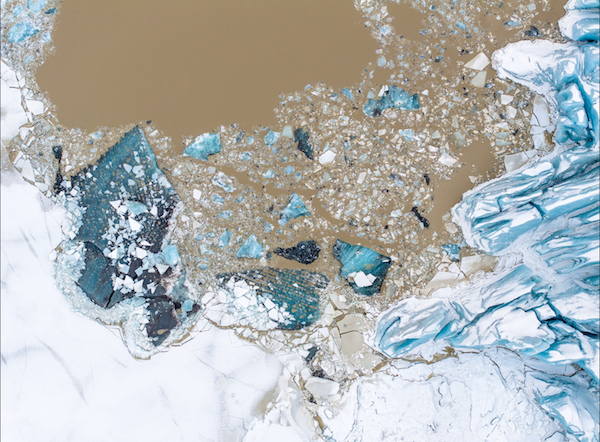 Without having intended to, I consequently became an eyewitness to the large-scale impacts of global climate change on the glaciers of Hornafjörður. My photo collection simultaneously preserves clear and unequivocal evidence of a world that once was and how it has been transformed over an incredibly short period of time.
These visual investigations also brought me personally to the boundary of science and art – the two main fields of human inquiry and creation – or rather to certain issues where they intersect. At the same time, I felt that the results contained within them a call for urgent action to counter the myriad environmental threats looming over both Icelandic nature and the Earth as a whole.
Without having intended to, I consequently became an eyewitness to the large-scale impacts of global climate change on the glaciers of Hornafjörður. My photo collection simultaneously preserves clear and unequivocal evidence of a world that once was and how it has been transformed over an incredibly short period of time.
These visual investigations also brought me personally to the boundary of science and art – the two main fields of human inquiry and creation – or rather to certain issues where they intersect. At the same time, I felt that the results contained within them a call for urgent action to counter the myriad environmental threats looming over both Icelandic nature and the Earth as a whole.
Photography is in many ways a misunderstood human activity, which has also repeatedly been devalued in recent decades. Certainly, the photographer must be wary of numerous pitfalls, not in the least the pernicious tendency to view the experience of natural beauty as a given, something they feel entitled to capture in every single photography excursion. Furthermore, an excessive emphasis on the visual can easily blind a person to the totality of sensual perception that true landscape appreciation is based on. The very act of photographing then consumes consciousness, while the natural impressions themselves – that which nourishes perception and the soul – fade into the background. Perhaps an image may emerge from this activity, but what meaning does it really have?
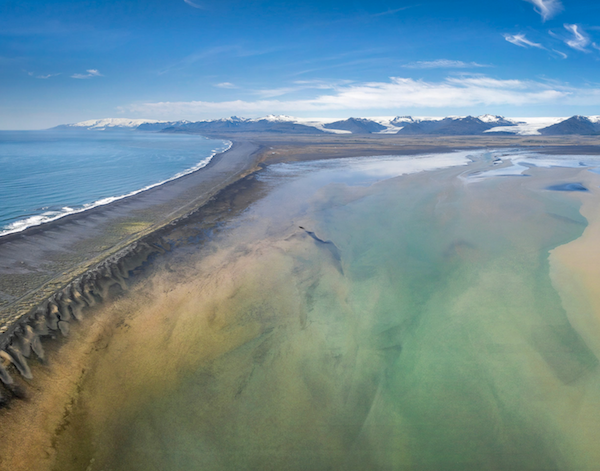 My own approach to landscape/glacial photography, and later filmmaking, is rooted in considerations about the beauty of nature and its role and value for human life. This is a subject that has long occupied my thoughts, but the glaciers have, to some extent, allowed me to close the circle – to find a synergy between the verbal and visual processing of the aesthetic properties of natural phenomena, as well as between the systematic, objective methods of science and the freer, more abstract methods which the arts have to offer.
The goal is to find a way to communicate a personal experience of natural beauty that is true – one that has a clear correspondence to the phenomenon itself and a grounded connection to it – while at the same time acknowledging that it is inevitably a product of the perception, knowledge, and intellect of a human observer.
My own approach to landscape/glacial photography, and later filmmaking, is rooted in considerations about the beauty of nature and its role and value for human life. This is a subject that has long occupied my thoughts, but the glaciers have, to some extent, allowed me to close the circle – to find a synergy between the verbal and visual processing of the aesthetic properties of natural phenomena, as well as between the systematic, objective methods of science and the freer, more abstract methods which the arts have to offer.
The goal is to find a way to communicate a personal experience of natural beauty that is true – one that has a clear correspondence to the phenomenon itself and a grounded connection to it – while at the same time acknowledging that it is inevitably a product of the perception, knowledge, and intellect of a human observer.
At the same time, I grapple with questions about this pursuit of beauty as such. The positive effect that being outdoors has on health and well-being should be obvious, but it is much more debatable whether the desire for beauty is wholesome or not. Not least in light of the fact that a significant part of the beauty I strive to document, understand, and communicate is a manifestation of the death throes of those very natural phenomena – the glaciers – which form the subject matter of my endeavours. I can in no way deny the knowledge that my personal experience, as well as expertise in science and scholarship, so clearly reveals to me. And when I return home, I need to find a way to face my grandchildren – five out of nine live in Hornafjörður – knowing that their future in this wonderful place is subject to great and increasing uncertainty due to global climate change.
When all is said and done, the core of the matter concerns what I myself – a sixty-something man, possessing a diverse set of knowledge and skills accumulated over a long lifetime – can do to ensure a safer, more prosperous, and more beautiful life for them and their descendants. This is the main lesson I have learnt and my guiding light.
Picture sources:
- Picture 1, portrait of Þorvarður Árnason, Jaunjo Ivaldi Zaldívar
- All other pictures by Þorvarður Árnason