
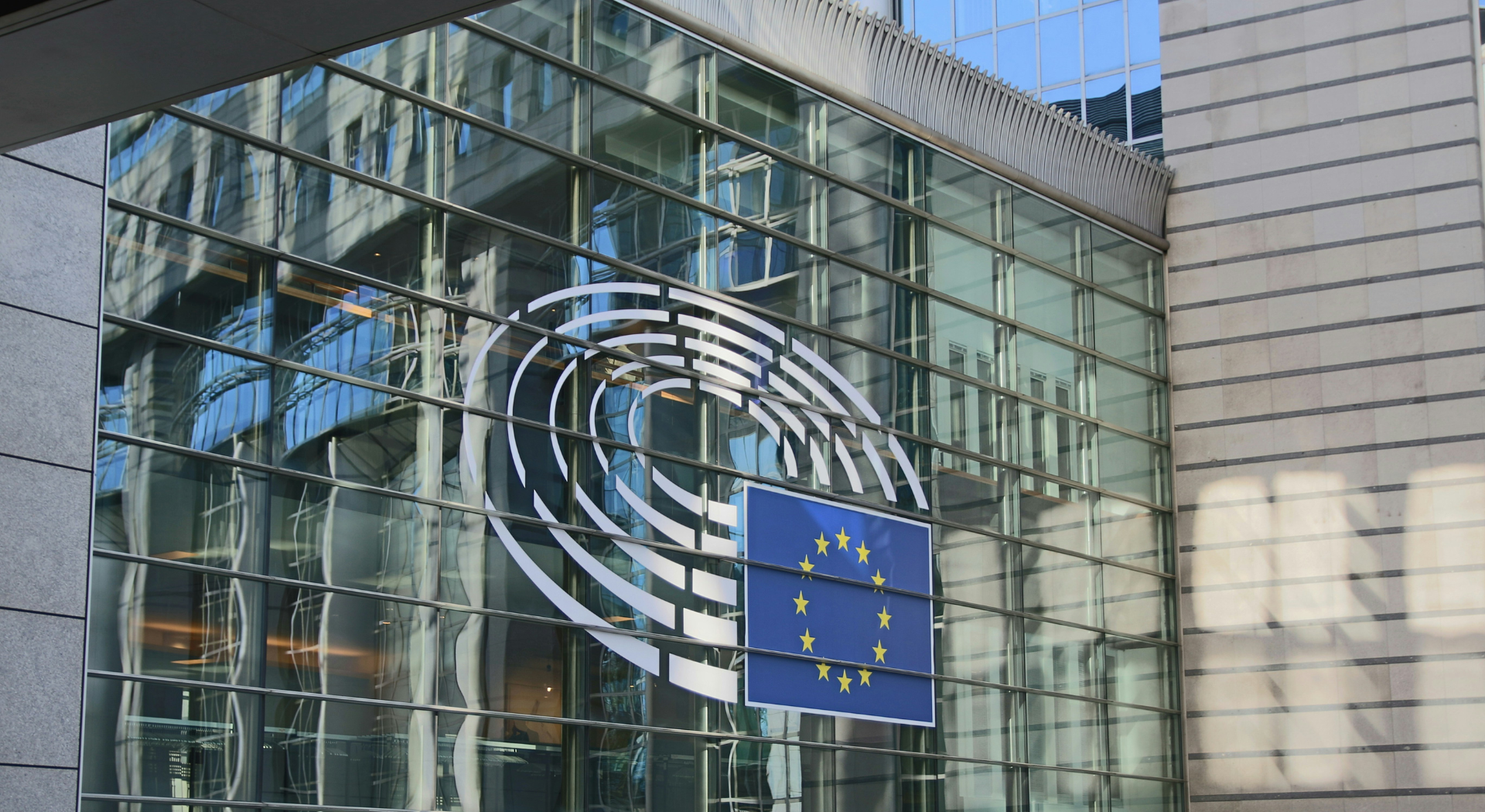
Image by Guillaume Périgois on Unsplash
The European Green Deal
The Green Deal is an investment in the infrastructure and technology needed for a just climate transition. It was launched by the President of the European Commission, Ursula von der Leyen in 2019 with the main goal of cutting emissions by at least 55% by 2030 and for Europe to be climate-neutral by 2050 (which is a legally binding commitment underpinned by the European Climate Law).
In 2025, the European Commission introduced the Omnibus Simplification Package, which narrows the obligations originally set forth in the Green Deal.
Notably, the scope of the Corporate Sustainability Due Diligence Directive has been restricted, as companies now have to conduct due diligence reporting only on social and environmental standards on their direct business partners, rather than at every step in their supply chain. Additionally, companies with less than 500 employees are exempt from due diligence reporting, unless they have been linked to documented violations.
This is also problematic because the greatest environmental and social abuses often take place at the lower levels of the supply chain. The ethical practices of an indirect supplier of a product (like a mine for precious metals) do not have to be closely examined, according to the Omnibus Simplification Package.
The scope of the Corporate Sustainability Reporting Directive has also been significantly reduced. Now, only companies with over 1,000 employees and a net turnover of over €50 million are required to report on ESG impacts. As a result, about 80% of European companies are excluded from mandatory sustainability reporting.
Proponents of the package say that European businesses need to be more economically resilient and competitive on a global scale, and that reporting costs time and money that are a hindrance to these goals. The Russia-Ukraine war and fraught relations with the U.S. have caused inflation and supply chain disruptions. However, the package’s critics say that it sets a dangerous precedent of valuing corporations over the environment and human rights.
EU targets
EU climate targets have been set for 2030 (a 55% reduction in net greenhouse gas emissions) and 2040 (a 90% reduction in net greenhouse gas emissions). These targets have been chosen in comparison to 1990 greenhouse gas emission levels.