
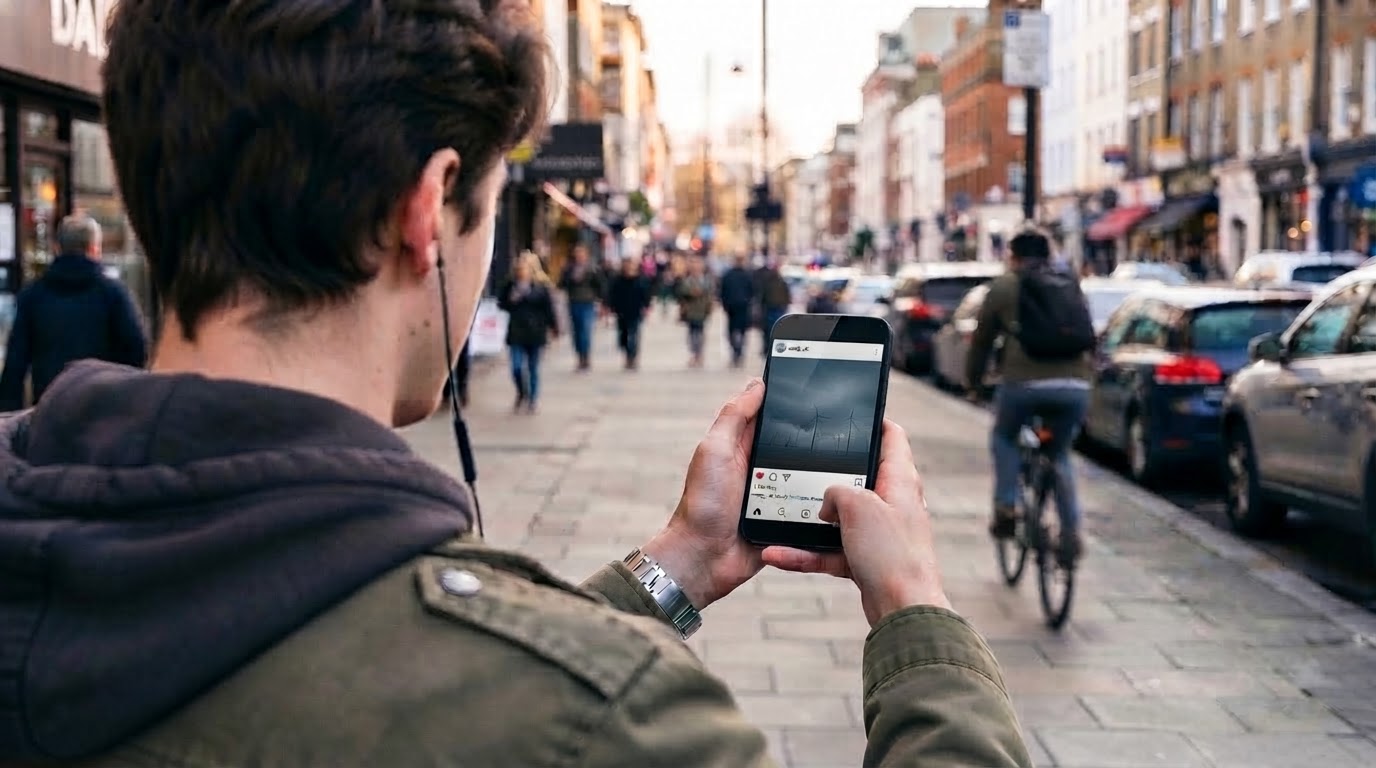
Image source: AI-generated
Understanding why misinformation spreads requires more than looking at the content itself. It is also important to consider how people process information and how social media platforms shape what we see, engage with and share.
Psychological mechanisms
People are not entirely rational. Our perceptions are influenced by a range of psychological mechanisms that influence how we understand, interpret and remember information.
The following section outlines some of these mechanisms:
Confirmation bias
We tend to favour information that confirms our existing beliefs. People who are already sceptical of politics or science are more likely to believe climate-sceptical content.
Emotional engagement
Fear and anger increase the likelihood of content being shared. Fake news deliberately exploits this.
Claims that climate action infringes on your personal freedom can trigger strong emotions and thus lead to high engagement rates and strong dissemination.
Simplifying complex issues
Climate change is a scientifically complex issue. Fake news offers simple answers to complicated issues. As a result, it appears easier to understand than nuanced scientific explanations.
The logic of platforms
Social media rewards content that attracts attention — regardless of whether it is true or false.
A video claiming incorrect information will often be shared millions of times, even if the claim is false.
The algorithm simply detects the amount of click-through rates, the viewing times, the amount of comments and user reactions. If these engagement metrics are high, the content is more likely to be offered to more people, creating a snowball effect.