
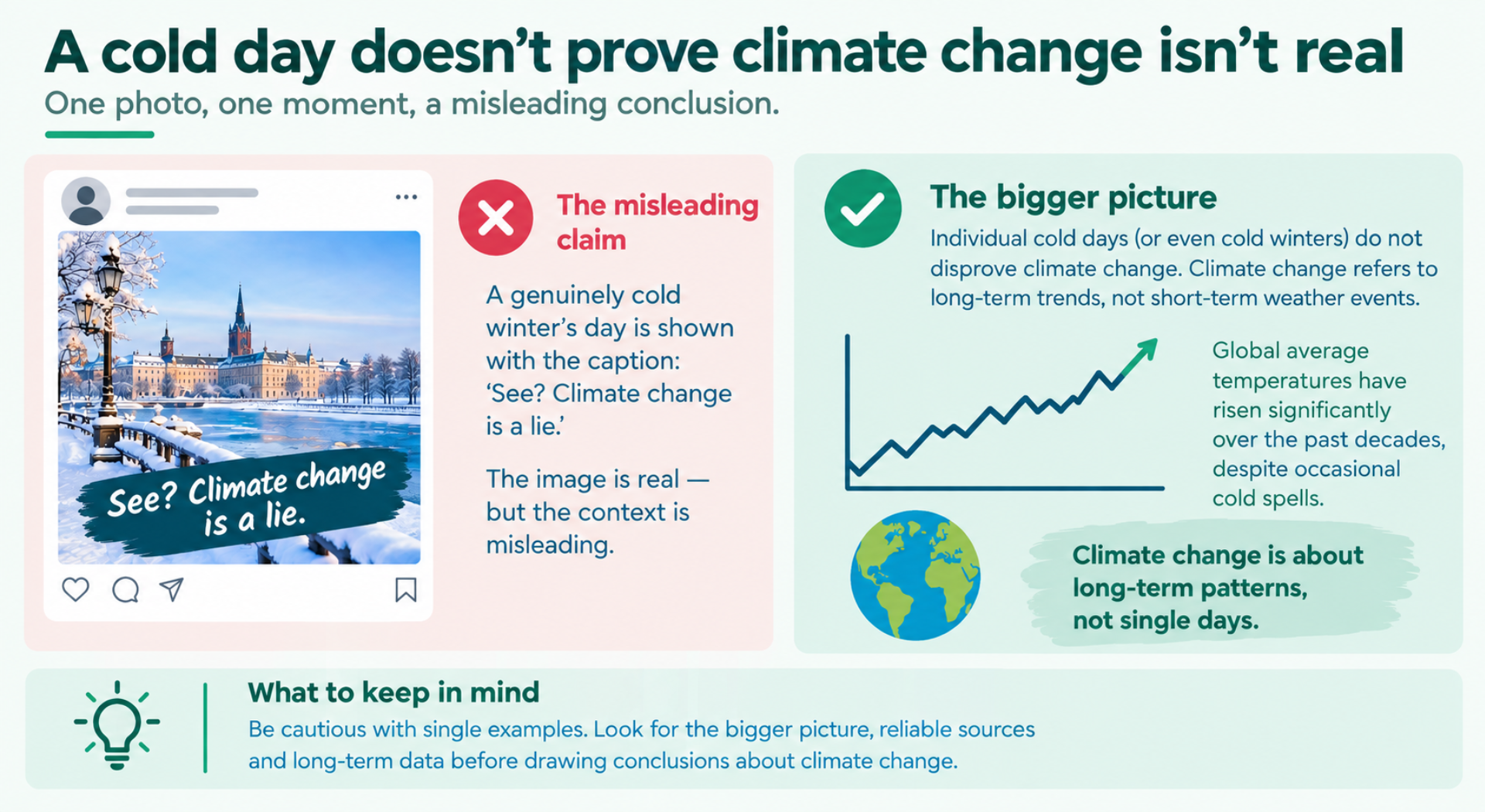
Image source: AI-generated
Misinformation: wrong, but not intentionally wrong.
Misinformation refers to false or misleading information that is spread without malicious intent. The person sharing it probably genuinely believes the information to be correct. They might be sharing an article they read, not knowing the information therein published is incorrect. When doing so, there is no deliberate deception.
Disinformation: wrong, and deliberately wrong.
Disinformation refers to deliberately false or manipulated information that is intentionally disseminated to deceive or influence people. This disinformation can be based on fake studies on climate change, manipulated graphs and fabricated claims. There is a strategic purpose behind this, such as trying to sow confusion, influence political opinions or undermine trust in science or classic news media. As we will see in the following chapters, this professionally organised deliberate manipulation is often emotionally charged and strategically disseminated.
Malinformation: true information being used to manipulate.
The information itself may be true, but it is deliberately used to harm, manipulate or misrepresent facts. Oftentimes selective facts or excerpts from scientific studies are mentioned out of context. We often encounter genuine photos taken out of context or with misleading captions.