
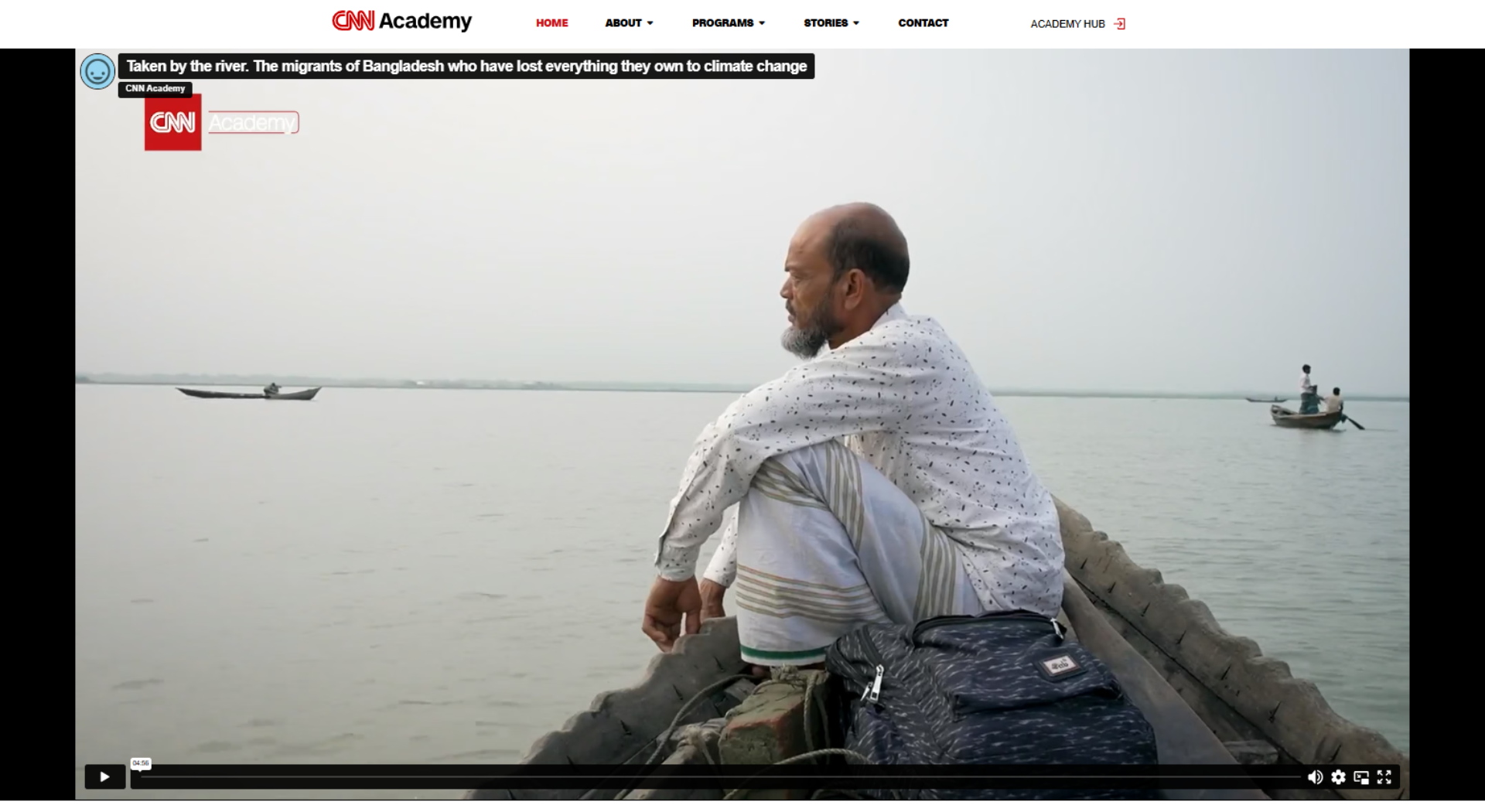
Source: Screenshot from Taken by the river. The migrants of Bangladesh who have lost everything they own to climate change – CNN Academy
Explore the documentary here: Taken by the river. The migrants of Bangladesh who have lost everything they own to climate change – CNN Academy
This documentary, by journalist Md Ibrahim Khalilullah, follows two brothers displaced by climate-linked disaster: one copes with overcrowding and poverty in Dhaka, where 2,000 new residents arrive every day, some 70% of whom are climate migrants; the other grapples with ceaseless soil erosion on a farm in rural Barisal, where the nearby rivers grow ever wider. It won a 2025 Covering Climate Now Journalism Award in the Displacement and Migration category.
Why this format
Displacement is an experience, not a statistic. Video carries emotional and visual specificity that summary would flatten.
What works well
Judges called it a poignant portrayal of climate change-induced displacement, achieved through powerful visuals and an emotional, intimate story.
What would be lost in another format
A data story could quantify the displacement figures, but couldn’t convey what erosion looks like from a riverbank, or what daily overcrowding feels like from inside it.
Pattern worth noting: both pieces succeed by pairing scale with specificity. Neither format works in pure isolation from the other register — most strong pieces borrow a secondary register to cover what their primary format can’t.