Skip to content

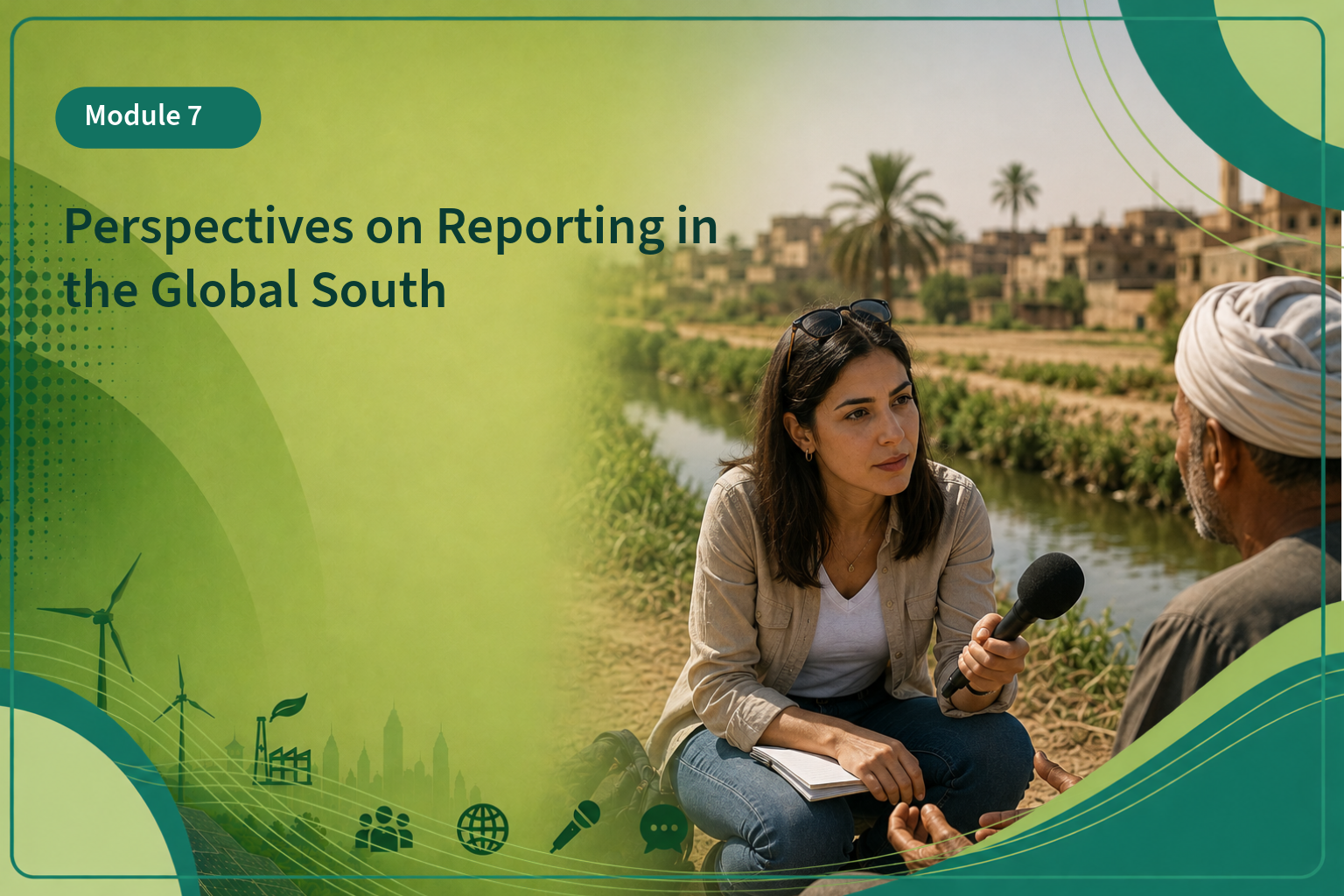
Module 7: Perspectives on Reporting in the Global South
Uncategorized

About Course

Climate change is a global challenge, but it does not impact everyone in the same way. Many countries in the global south are disproportionately impacted by climate change, and are also less equipped with the resources to effectively adapt to or mitigate the damages caused by it. This combination of unequal burden and scarce resources is often reproduced in media landscapes, and impacts reporting on climate change across the developing world. The “global south” is a catch-all for “non-Western.” It is incredibly diverse and should not be lumped together as a single experience. This module aims to share a diversity of experiences and broader context to those less familiar with climate impacts and reporting outside of the “global north.”

Show More

What Will You Learn?

  • Develop a broad understanding of climate change impacts in several contexts in the global south.
  • Build strategies for understanding the reporting context broadly and with specific reference to climate and environmental journalism.
  • Understand the link between climate justice and ethical reporting in the global south
  • Explore some examples of climate reporting from diverse contexts and consider what makes them effective.
  • Have a clear understanding of the heterogeneity of experiences and conditions. This module is a first step towards further investigation into climate reporting in non-Western contexts.

Course Content

Chapter 1: Navigating the Landscape

  • Defining the Global South and Reporting from it
  • Understanding the Reporting Context
  • Identifying local sources
  • Learning to spot opportunities and barriers (and how to overcome them)

Chapter 2: Reporting the Climate Ethically in Diverse Contexts

Climate Storytelling in Practice: Cases from the Global South
This chapter highlights some examples of climate storytelling from across the global south. The three platforms below all offer content in English. They are accessible examples of approaches to climate coverage, however, it should be noted that they do not represent the wealth of climate reporting in diverse languages across an equally diverse group of countries. Additionally, none of these publications are explicitly “climate” publications—but they foreground climate change. Many of the most effective and renowned climate journalists and experts now argue for an approach where “all journalism is climate journalism” as a best practice. As a strategy, this helps build a larger audience, lowers risk of audience fatigue, and reflects the truly multidimensional and interconnected nature of the climate crisis.

Conclusion & References

Final Test: Perspectives on Climate Reporting in the Global South

Accessibility Toolbar