By Lauren Textor
At first glance, Abbeyleix in County Laois appears to be much like other small Irish towns. It has a museum dedicated to local history, a playground and a handful of bakeries, coffee shops and restaurants along one main road.
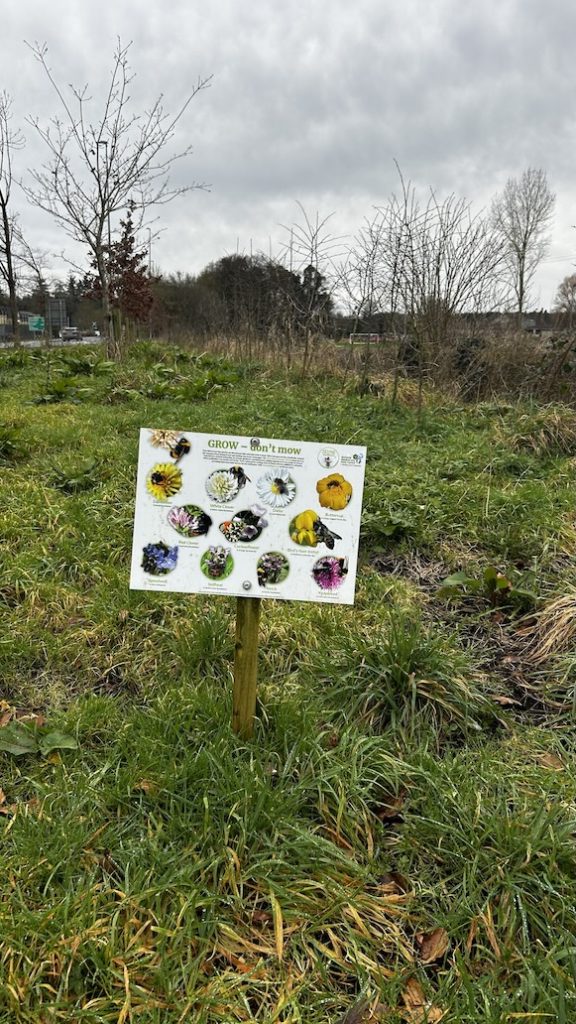
Look more closely and you’ll see the subtle markers of intentional sustainability. A free water refill station in the town center. Native hedgerows and orchards, sign-posted with resources from the All-Ireland Pollinator Plan. Bug hotels and flowering meadows. One of the main draws to visitors is the 100 hectares of protected bog at the far side of town. Well-maintained walking paths, a boardwalk and a bog bridge have replaced the old railway line, thanks to volunteers.
In 2023, Abbeyleix beat nearly 900 competitors to be named Ireland’s tidiest town. According to a recent survey, one in five of the approximately 2,000 residents regularly participate in clean-ups or environmental initiatives.
The high rate of community engagement is partly due to an active Tidy Towns volunteer group. Tidy Towns is the longest-running environmental initiative in Ireland, with a competition first established in 1958 to promote civic pride and clean public spaces. The Abbeyleix chapter was founded the next year.
Local groups have made significant progress in protecting biodiversity and documenting those efforts, particularly in recent years.
During the height of the Covid-19 pandemic, the Abbeyleix Climate Action Project was formed as part of the Creative Ireland Programme, supported by Creative Ireland Laois, Laois County Council and Midlands Science.
Science communicator Dr. Niamh Shaw served as a scientist-in-residence for the project from October 2020 to May 2021. She hosted Abbeyleix Almanac TV, a video series broadcasted through Facebook.
“Basically, it was like a notice board for the community,” Shaw said. “It was to help the elderly, make people feel a greater sense of community, and then also highlight all the different activities that are going on around climate action and any community initiatives that people can get involved in.”
The hour-long series ran for six weeks, with an extra Christmas special. There were segments on food waste, cycling, birdwatching, gardening and horticulture. As a follow-up, Shaw designed an interactive walking tour through Abbeyleix. The path from Heritage House to the bog is marked with ceramic tiles, which are printed with QR codes that lead to videos and animations when scanned. Shaw worked with graphic designer and animator Paulina Nickstrom and videographer Alistair Roe of Vimar Productions on the series.
“After that initiative, I realized that if you’re going to do anything in terms of science communication, you have to engage the community,” Shaw said. “So I completely changed the way I worked as a consequence. I have found a new way of prioritizing conversations with the community first, before you decide what you’re going to do, what you’re going to share, what you’re going to learn together.”
Shaw’s role as the scientist-in-residence has ended, but the documentation of Abbeyleix Tidy Towns’ progress has continued through its website. Volunteer Mark Clancy updates the online story maps, graphics, reports and press releases. Clancy said he believes in the importance of hard data and that the group’s work should be accessible to anyone who is interested.
“I suppose we’re trying to put ourselves out there as a sort of pilot community, and we’re trying to get people to research us or measure us to put a bit more science behind us and see what exactly are we achieving, if anything,” Clancy said. “I suppose you can know instinctively that you’re doing something and hopefully making a difference. But it is nice to underpin it with some real science and get baselines.”
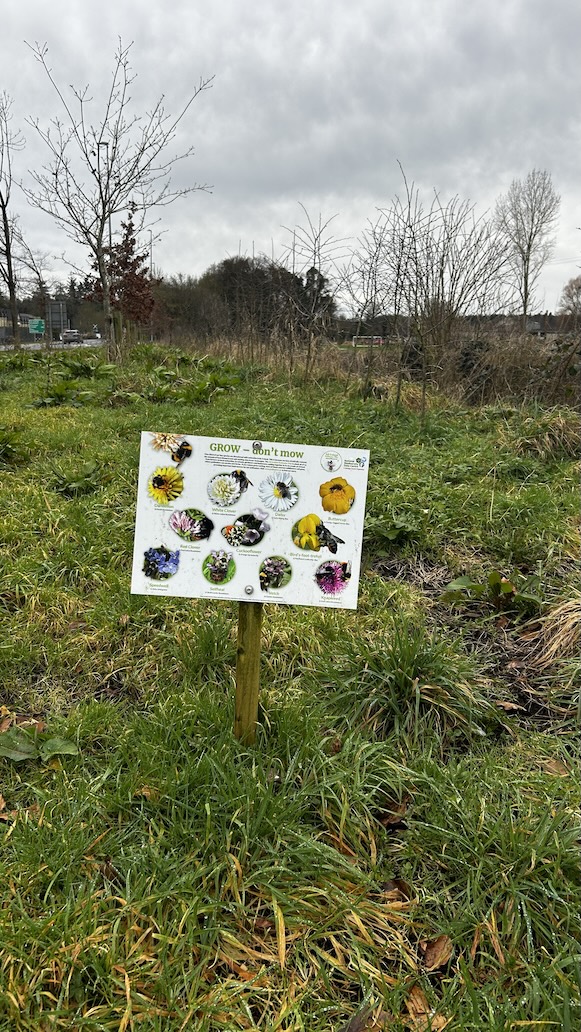
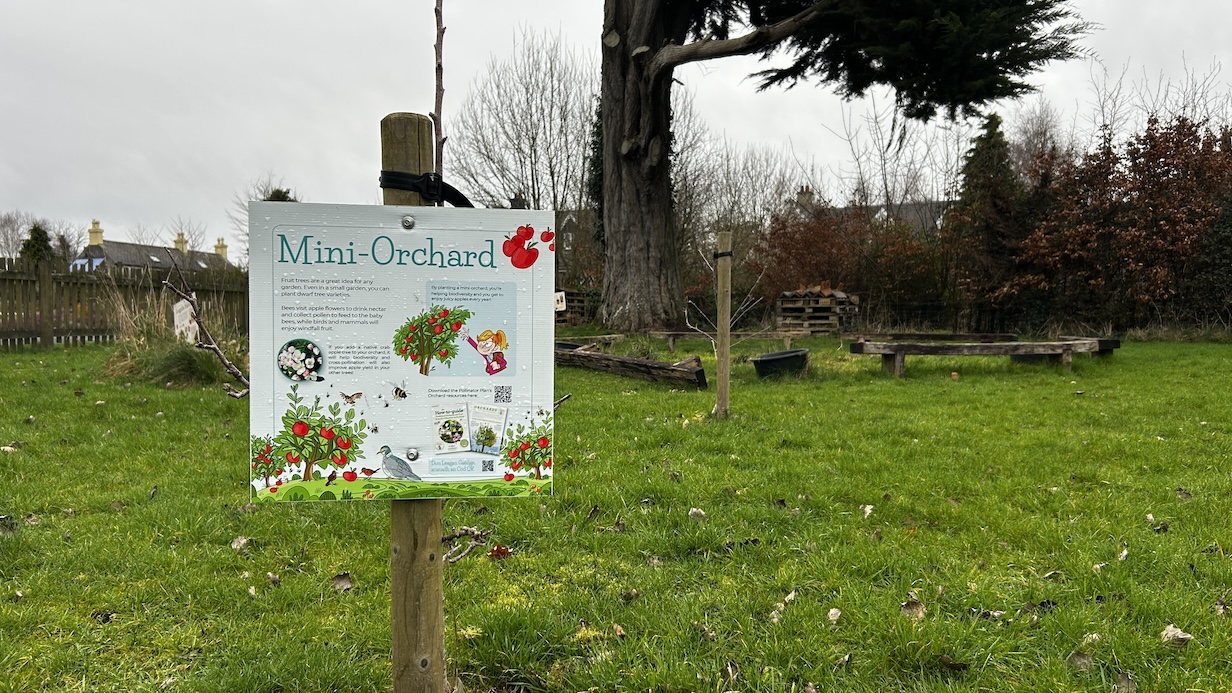
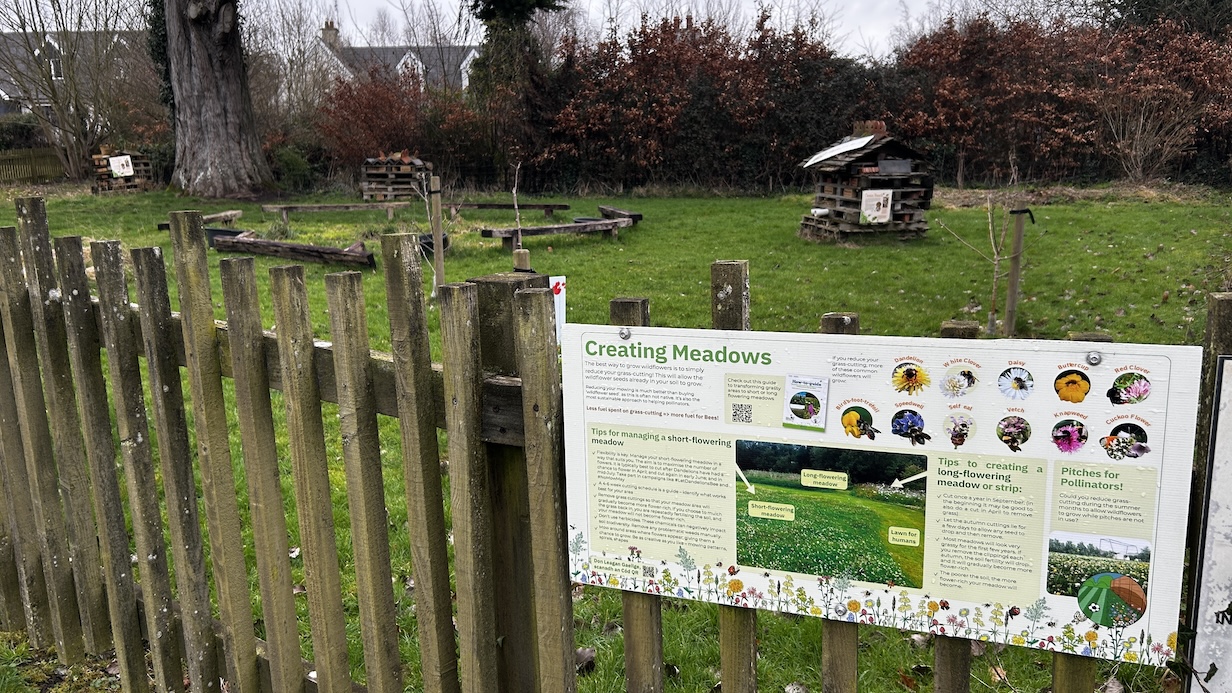
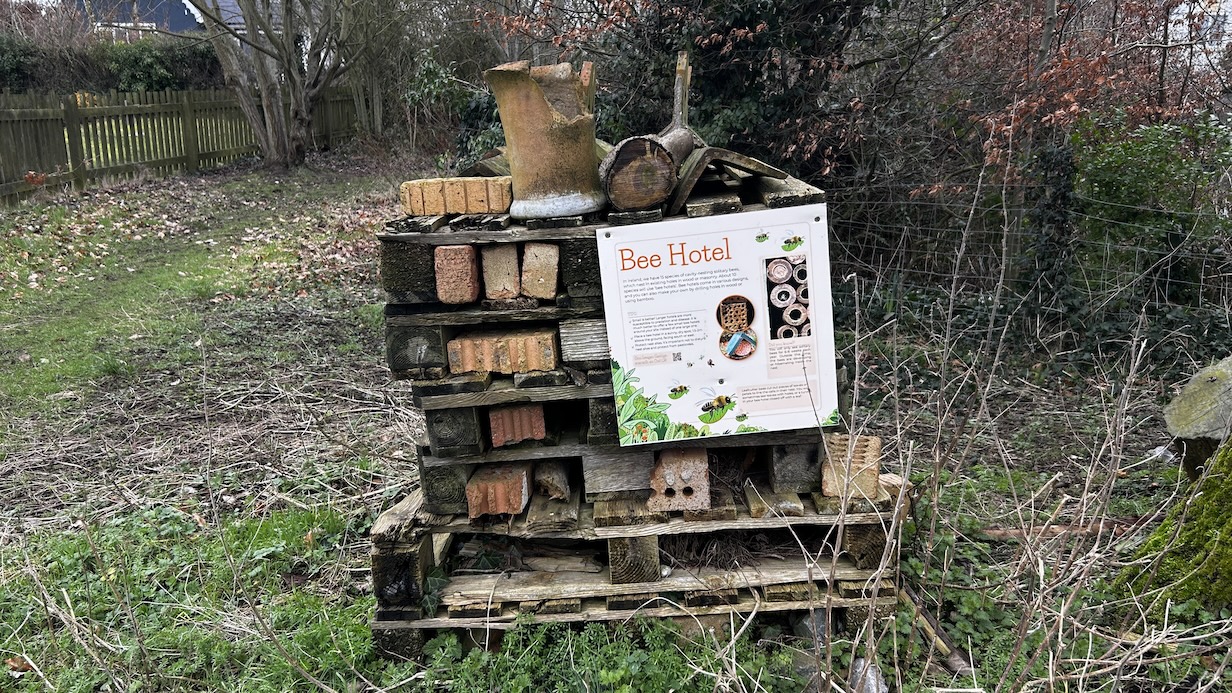
Abbeyleix’s meadows, insect hotels, orchards and native hedgerows are in line with the All-Ireland Pollinator Plan, which recommends creating food and/or shelter havens for pollinators at every 200 meters.
Earlier this year, the Abbeyleix Biodiversity Programme (another Tidy Towns project) received a €10,000 grant from Community Foundation Ireland and Ireland’s National Parks and Wildlife Service. A portion of the funding will be used to commission materials for biodiversity case studies, including short promotional videos about ongoing projects and an updated biodiversity roadmap.
“We generally don’t market ourselves as trying to solve the climate problem,” Clancy said. “We say we’re trying to make our little local patch better. That’s a much easier sell for us. You can be quite selfish, almost, like you’re not doing this for any overarching principle, you’re just doing it to make your patch better.”
Kathleen O’Connor knows all about tending to the local patch– she’s one of the volunteers who works in the community garden. She has lived in Abbeyleix for 26 years and joined the local Tidy Towns organisation about five years ago.
“I’ve always watched what they’re doing,” she said. “My father was living with me for a while, and he used to come out and help. At the time, we’d just go out and help out in the local estate or help tidy the street close by. But when he passed, I got more involved. We have two nights a week that we meet as a group. It’s a lovely way of meeting people.”
The garden used to be dominated by carrots, but its caretakers have now diversified its offerings to promote pollinators. They even create, bottle and sell fertilizer from the garden as part of a circular economy initiative.
Elsewhere in town, meadows are left untamed so that pollinators can take their pick of native plants.
“When the school gets out in the summer, they don’t use the grounds,” Clancy said. “They let everything grow wild, and we sign an agreement with them, saying, ‘if you stop cutting for the summer, we will guarantee to come in the week before you’re back to school, and we’ll have everything back in place.’”
The town’s pollinator art competition is based on a similar concept. Community members are encouraged to let their lawns grow long and then cut out designs in the grass (last year, Celtic crosses were popular). Tidy Towns representatives then take aerial photos of the meadows with a drone, which are later judged on aesthetic merit.
The Nature Corner is yet another successful project. It offers landowners a chance to speak with local ecologists and create a plan for a portion of their yard, which is then populated with pollinator-friendly plants and trees.
Each of these endeavors support the All-Ireland Pollinator Plan. The gold standard, according to Communities Pollinator Officer Kate Chandler, is to have food or shelter for pollinators at every 200 meters. This can be accomplished by the reduction of mowing and the restoration of grassland.
“Every little patch of grass that’s managed in that way is part of contributing to that– creating more habitats, however small, and joining the dots,” Chandler said.
Chandler identifies the main threats to pollinators as a loss of food and shelter, as well as exposure to pesticides and chemicals. She said that it’s difficult to attribute the distribution of species to a particular cause, but that changes in climate and the life cycles of native plants have already affected Irish wildlife.
Some species (like the Great Yellow Bumblebee) have already been pushed to the fringes of the areas that they would normally inhabit, while others (like the tree bumblebee) are immigrating from elsewhere in Europe.
“It’s all a very delicate balance, and if there’s a disruption to that as a result of climate change, then the support that pollinators rely upon are going to be disrupted as well,” Chandler said.
Chandler recommends that anyone passionate about biodiversity starts off by protecting what is already in their area.
“It can be tempting to go out and plant trees, for example, and just really go for it and do something very hands-on. But there’s a first step that’s essential, and that’s stepping back, looking around and seeing what habitats are already in the area– because chances are, there will already be even little pockets of habitats that are a valuable source of food or shelter, and protecting them should be a priority.”Further resources and guidelines are available at pollinators.ie.