
Image source: AI-generated
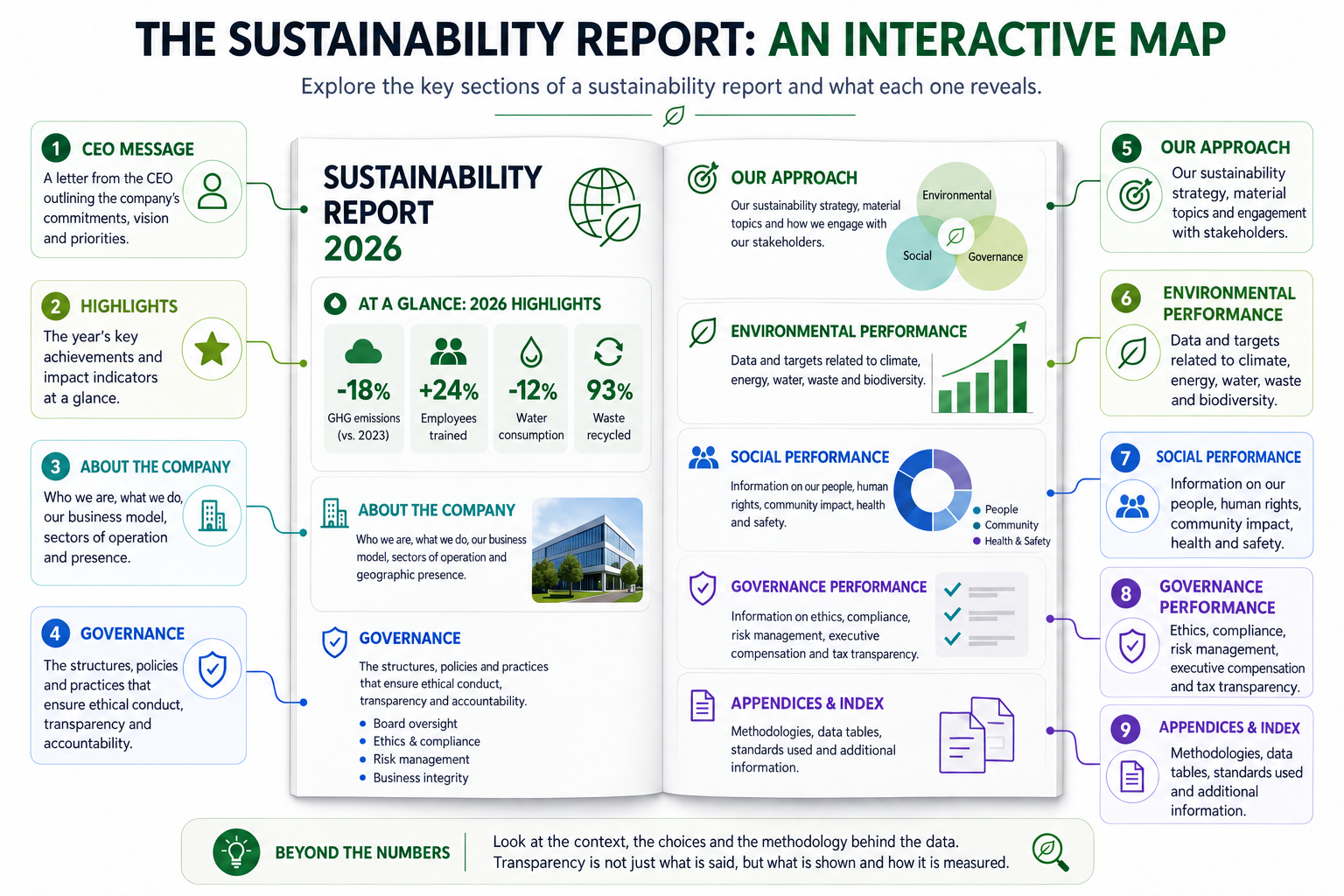
Most sustainability or ESG reports follow a similar structure, especially under frameworks such as the Corporate Sustainability Reporting Directive and ESRS.
Typical Sections:
- Executive Summary / CEO Statement: High-level commitments and achievements. Often optimistic and forward-looking.
- Strategy and Business Model: Integration of sustainability into operations. May lack concrete detail.
- Materiality Assessment: Defines what the company considers relevant. Key area where important issues may be excluded.
- ESG Performance Data: Metrics, KPIs, emissions data. Requires careful interpretation.
- Targets and Commitments: Net-zero goals, timelines. May lack interim milestones.
- Methodology and Scope: Explains how data is calculated. Often technical—and sometimes vague.