
Image source: AI-generated
A sustainability report can use persuasive language while providing too little information to assess the claims it makes. The following fictional excerpt illustrates why readers should examine the evidence behind statements about environmental performance. Useful criteria include accuracy, balance, comparability and verifiability.
“At GreenFuture, we are committed to building a better tomorrow. We integrate sustainability into everything we do. Our operations are 100% eco-friendly and have a positive impact on the planet. In 2025, we significantly reduced our environmental footprint across all locations. We are proud to lead the way in responsible business. Through innovation and commitment, we deliver sustainable solutions that create value for our customers and communities. We follow industry best practices and comply with all relevant regulations. Our sustainability strategy aligns with global goals. Together, we are creating a sustainable future for generations to come.”
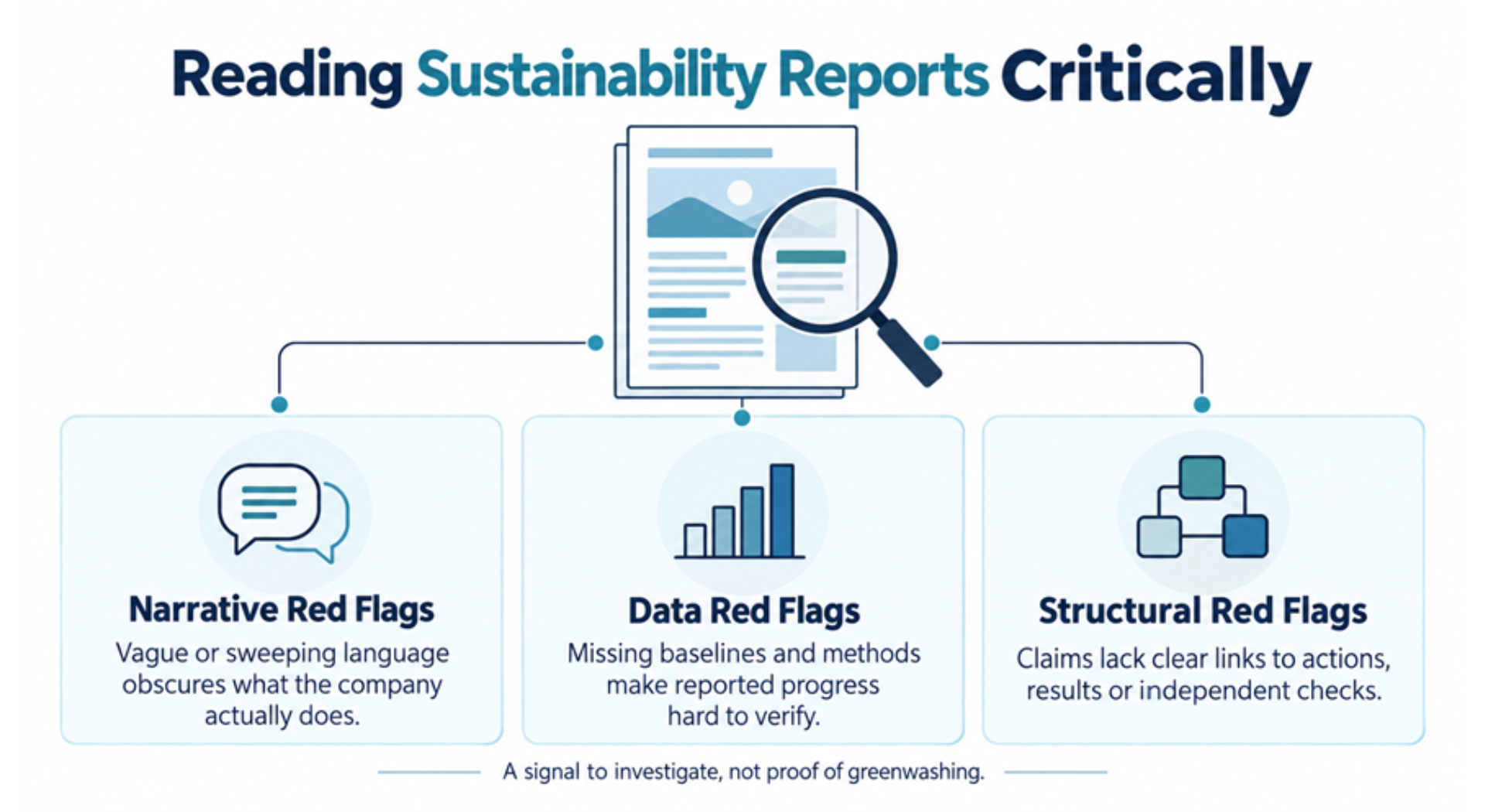
Narrative Red Flags
Expressions such as “a better tomorrow” and “a sustainable future for generations to come” convey ambition and appeal to emotion, but say little about current performance. Terms such as “sustainable solutions” and “responsible business” are also difficult to evaluate unless the company defines what they mean.
Broad or absolute statements require particular scrutiny. “We integrate sustainability into everything we do” gives no indication of which activities are covered, while “100% eco-friendly” suggests a level of certainty that would require clear boundaries and substantial supporting evidence. Claims to “lead the way”, follow “industry best practices” or align with “global goals” should identify the relevant benchmarks, practices or goals. Guidance on environmental claims likewise stresses that general terms must be clear and supported by evidence.
Data Red Flags
“Significantly reduced” sounds like a result, but the excerpt gives no figure, baseline year or definition of “environmental footprint”. A reader cannot tell whether the reduction concerns emissions, energy, water or another measure; whether it is an absolute reduction or a reduction per unit of output; or which locations are included.
The same questions apply to the claim of a “positive impact on the planet”. Reports should explain how indicators were selected and calculated, disclose relevant limitations, and allow performance to be compared across years. Selectively presenting favourable figures, omitting material impacts or changing methods without explanation can create a misleading impression even when individual figures are correct.
Structural Red Flags
The excerpt refers repeatedly to commitment and strategy but offers no specific targets, actions, responsibilities or results connecting them to measurable change. Its assertion that the company complies with “all relevant regulations” is also impossible to assess without knowing which requirements and jurisdictions it means.
For climate claims, readers should check whether reported progress comes from reductions in the company’s own emissions, the purchase of offsets, or both. Where external assurance is cited, they should establish which information was verified and what the assurance covers. An absence of external assurance may warrant a question, but does not, by itself, establish that a report is misleading.
Questions to Ask
- Is each claim specific enough to test, with a defined scope and reporting period?
- Are the underlying data, baseline and calculation methods available?
- Does the report acknowledge setbacks, limitations and significant impacts alongside achievements?
- Can important claims be checked against independent evidence or an assurance statement?
These signals are reasons to investigate, not proof of greenwashing. The supporting information may appear elsewhere in the full report. A sound assessment compares the claims with the company’s data, methods, actions and results before drawing a conclusion.